I discovered this on a visit to Portsmouth University's Chaplaincy. Ok it's schmaltzy, but just occasionally one of these things gets under my radar...
Tech Support: Yes, .. how can I help you?
Customer: Well, after much consideration, I've decided to install Love. Can you guide me through the process?
Tech Support: Yes. I can help you. Are you ready to proceed?
Customer: Well, I'm not very technical, but I think I'm ready. What do I do first?
Tech Support: The first step is to open your Heart. Have you located your Heart?
Customer: Yes, but there are several other programs running now. Is it okay to install Love while they are running?
Tech Support: What programs are running?
Customer: Let's see, I have Past-Hurt.exe, Low-Self-Esteem.exe, Grudge.exe and Resentment.exe running right now.
Tech Support: No problem, Love will gradually erase Past-Hurt.exe from your current operating system. It may remain in your permanent memory but it will no longer disrupt other programs. Love will eventually override Low-Self-Esteem.exe with a module of its own called High-Self-Esteem.exe. However, you have to completely turn off Grudge.exe and Resentment.exe. Those programs prevent Love from being properly installed. Can you turn those off?
Customer: I don't know how to turn them off. Can you tell me how?
Tech Support: With pleasure. Go to your start menu and invoke Forgiveness.exe. Do this as many times as necessary until Grudge.exe and Resentment.exe have been completely erased.
Customer: Okay, done! Love has started installing itself. Is that normal?
Tech Support: Yes, but remember that you have only the base program. You need to begin connecting to other Hearts in order to get the upgrades.
Customer: Oops! I have an error message already. It says, "Error - Program not run on external components" What should I do?
Tech Support: Don't worry. It means that the Love program is set up to run on Internal Hearts, but has not yet been run on your Heart. In non-technical terms, it simply means you have to Love yourself before you can Love others.
Customer: So, what should I do?
Tech Support: Pull down Self-Acceptance.exe; then click on the following files: Forgive-Self.txt; Realize-Your-Worth.txt; and Acknowledge-Your-Limitations.txt.
Customer: Okay, done.
Tech Support: Now, copy them to the "My Heart" directory. The system will overwrite any conflicting files and begin patching faulty programming. Also, you need to delete Verbose-Self-Criticism.txt from all directories and empty your Recycle Bin to make sure it is completely gone and never comes back.
Customer: Got it. Hey! My heart is filling up with new files. Smile.mpg is playing on my monitor and Peace.txt and Contentment.txt are copying themselves all over My Heart. Is this normal?
Tech Support: Sometimes. For others it takes awhile, but eventually everything gets it at the proper time. So Love is installed and running. One more thing before we hang up. Love is Freeware. Be sure to give it and its various modules to everyone you meet. They will in turn share it with others and return some cool modules back to you.
Customer: I will. Thank you for your help.


Godly Play
"I'd rather spend more time with my parents than go out shopping at the weekend", (local child, aged 9).
A couple of days ago I returned to one of the things I used to really love about being a parish priest - story-telling with primary school children.
A small group of us went into a local school and told the story of the Creation. We were using the Godly Play technique (Montessori-style tactile learning).
We sat on the floor in a circle and using some very basic, but well made, cut-outs we ran through the ancient story from Genesis 1 of God's gift of Creation, 'In the beginning.... On the first day... On the second... And God saw that it was all very good'.
The great thing about Godly Play is the way that over a dozen kids can sit still for nearly 30 minutes completely entranced by the meditative unfolding of a simple story. When I tell a story like this, it often feels a bit like celebrating a Eucharist there is such intensity and reverence in the room.
What's even more exciting is that after the story-telling proper, the circle is encouraged to 'wonder' about the story. Instead of old-style chalk and talk Religious education (RE), Godly Play is both faithful to the Bible texts, but also completely open to allow children to discover what the texts mean for them. It's a remarkable post-modern approach to RE.
As part of our wondering I played at removing various of the seven 'days' and asking the children what they felt. Several of the children wondered whether if the 'seventh day', the 'day to rest and remember', were removed from a week, people's bodies and minds would begin to break down. One lad suggested it might lead people to commit suicide.
In one of the other groups a similar question led one child to make the comment I began this entry with: s/he'd rather spend time with family on a Sunday than have another day out shopping with mum and dad. And all this, just as the Government's Department of Trade and Industry considers extending Sunday trading hours...
More info about Godly play and other links on this blog entry here.
Singin' Bout the Revolution
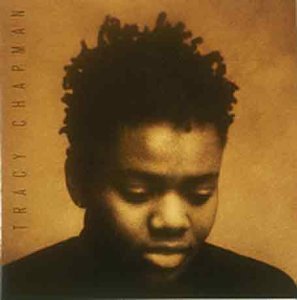
On a car trip to visit friends we rediscover Tracy Chapman. Several of the tracks from her debut album are stunningly good, especially for the liberation-theology minded:
Why? (1986) (Clip here).
Why do the babies starve
When there's enough food to feed the world
Why when there're so many of us
Are there people still alone
Why are the missiles called peace keepers
When they're aimed to kill
Why is a woman still not safe
When she's in her home
Love is hate
War is peace
No is yes
And we're all free
But somebody's gonna have to answer
The time is coming soon
Amidst all these questions and contradictions
There're some who seek the truth
But somebody's gonna have to answer
The time is coming soon
When the blind remove their blinders
And the speechless speak the truth
and
Talkin' Bout A Revolution (1982) (Clip here).
Don’t you know
They’re talkin’ bout a revolution
It sounds like a whisper
Don’t you know
They’re talkin’ about a revolution
It sounds like a whisper
While they’re standing in the welfare lines
Crying at the doorsteps of those armies of salvation
Wasting time in the unemployment lines
Sitting around waiting for a promotion
Poor people gonna rise up
And get their share
Poor people gonna rise up
And take what’s theirs
Don’t you know
You better run, run, run...
Oh I said you better
Run, run, run...
Finally the tables are starting to turn
Talkin’ bout a revolution
Album here.
Why 'heresy' is now 'opinion'
 In his portrait of the Reformer John Calvin, William Bouwsma makes the important observation that a fundamental shift has occurred since the sixteenth century in the philosophy of epistemology (or, how we think we know something).
A difference of opinion in the sixteenth century among theologians, like Calvin, might have led to charges of willful and dangerous heresy and punishment by death. Today such a theological difference of opinion may be allowed on the basis of the possibility of alternative interpretations.
This shift does not lie merely in the extension of a 'civilized' culture or in changes in law, or social values. It is due to a deeper move:
'Fundamental to traditional culture was a confidence that the human mind is capable of knowing what exists as it really is: as God might know it... The mind is united and becomes identical with what is known. Aristotle had said this directly: "The act of knowing is the same as the thing known."
In this conception of knowing, the role of the knower is passive: the active role in the union of knower and known is played by the object, which impresses itself on the mind.
This conception might be contrasted with the modern notion of thinking about a thing, a notion that assumes a distinction between thought and its object and recognizes the possibility of wide discrepancies between them.
The traditional conception was ... absolutist and authoritarian. If our knowledge is of things themselves as they really are, there should be, in principle, no disagreement.Difference of opinion in matters of knowledge could only be construed as resulting from deficiency of mind or from perversity: a difference of opinion stubbornly maintained would, from this standpoint, be wicked.
In any case the truth about things, especially in important matters, must be made to prevail. This position could lead to charges of heresy not only in religion but also in the natural sciences or even history.'
John Calvin, A Sixteenth Century Portrait, pp. 69-70.
Other ways of speaking salvation?
I am in a foul mood. A little depressed, withdrawn, edgy, suspicious, tired.
My wife comes to me and I snap at her.
She does not respond by snapping back. She offers me a drink and a chocolate biscuit.
In a sudden, I am overwhelmed by her grace in the face of my behaviour. She doesn't deserve my ill temper.
My realization changes me. In graciously giving of herself, my negativity is absorbed. In an instant I am saved and restored.
I notice similar transformations involving everyday grace. Here's another:
My toddler guilelessly joins in the circle we form around the communion table in Church. I pick him up.There are many biblical models for salvation and atonement, all of them inadequate on their own. One of them almost comes close to this - Abelard's idea that the free self-giving of God in Christ overwhelms us and transforms us.
He comments without any concern for others' opinions that there is bread and wine being handed around. When it comes to him he holds out his hand, too.
His presence brings smiles to other faces. The mood of the circle is lifted.
Why? It is, I think, because of the grace of the gift of himself to us. His unconcern for himself - his living his life without calculation - brings a glimpse of grace.
We see him, just briefly, as a gift. And that glimpse momentarily transforms those of us around him who witness it.
(There's a touching example of this 'economy of grace' triumphing over the 'economy of hatred' right at the moment of the crucifixion. A Centurion who sees the way Jesus dies - his treatment by others and his refusal to respond with hatred - is in that moment converted: 'Truly this man is the Son of God'.)
Often though such a 'moral example' theory puts the emphasis on us to choose to respond to grace, and that is its weakness: that it is too 'subjective'.
My experiences described above though involve no moments of calculated choice. I am simply overwhelmed by grace, I have no choice in the matter at all.
The Church has never given its approval to any particular theory of salvation. None of the early Creeds focused on it. Pragmatically speaking every theory is a rhetorical construction of its age whose aim is to help us recognize our salvation for ourselves.
What would the rhetoric of salvation look like today if it traded on twenty-first century experiences, anxieties and dreams?
Generous answers on a post card...
'...he is not here.'
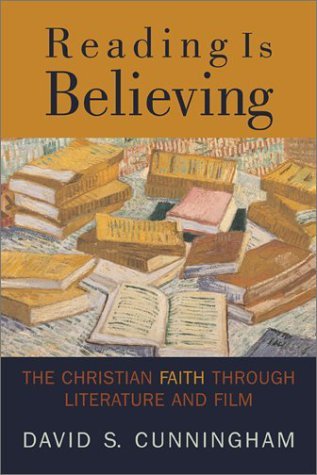 A final quote from David Cunningham's book Reading is Believing, an introduction to the Apostles' Creed via the writings of Iris Murdoch, P. D. James, Dickens, Shakespeare, Toni Morrison, Barbara Kingsolver and others.
Writing about the sixth article of the Apostles' Creed ('...he ascended into heaven'), Cunningham makes the surprising assertion that our faith is superior to that of the original witnesses of the Resurrection.
'Since Jesus is not here [any longer after the Ascension] as a single, fully human, fully enfleshed being, this implies that our Christian faith is not compelled by God. God does not force us to believe by means of a physical presence that would, as it were, quiet all our doubts.
Our freely given faith is, in some sense, superior to the faith of those who, like Thomas, seemed to have little choice in the matter. (In John 20:29, Jesus says, "Have you believed because you have seen me? Blessed are those who have not seen and yet come to believe.")
The physical presence of another person is an overwhelming experience; no longer does our relationship to that person require much action or initiative on our parts. We are almost compelled to acknowledge the existence of the other by that person's sheer physical presence.
In that person's absence, our faith and love are put to the test; now it will require an act of our own will, a determined decision, to bring the other person to mind, and to place our trust and devotion there. Our belief in the ascension of Jesus is a sign and seal of the depth and breadth of our faith.'
Cunningham on the Resurrection
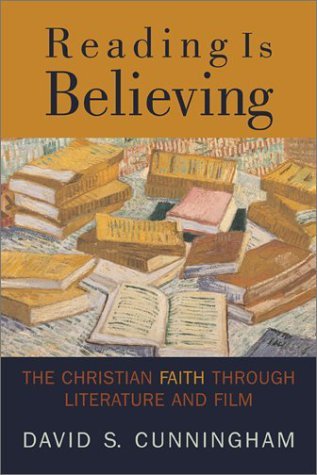 A little early perhaps considering it is still Maundy Thursday, but still...
An excerpt from Cunninghams's treatment of the fifth article of the Apostles' Creed, '...On the third day rose again...'.
'The resurrection of Jesus ... is, above all, an authentication of the life of Jesus: a claim that God officially approves of his teachings and his willingness to die at the hands of the state.
The particular form of Jesus' life and death is thereby described as a good form, a divinely sanctioned form.
In addition, the resurrection of Jesus makes a statement about suffering and death--namely, that death does not have the final word. God's mighty act of raising Jesus from the dead is, as Paul puts it, a defeat of death by death (1 Cor. 15:54). "Death no longer has dominion over him" (Rom. 6:9); and, by extension, death no longer has dominion over us.'
Reading is Believing (p. 102).
Subscribe to:
Posts (Atom)