Search This Blog

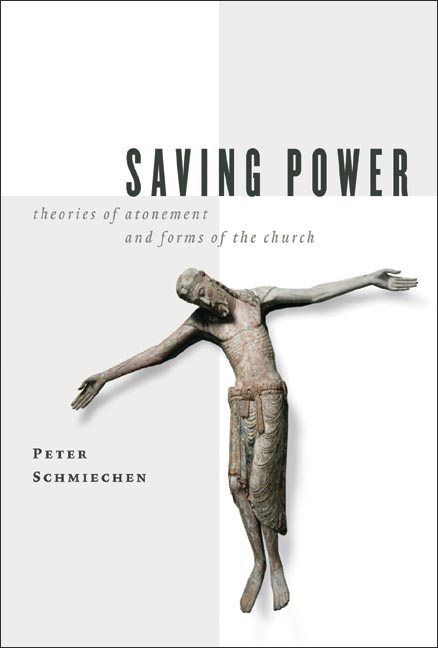
Saving Power


For theological geeks (ok, like me) who are interested in atonement theologies - and for those who are surprised at the plural theologies, Peter Schmiechen's Saving Power: Theories of Atonement and Forms of the Church looks fascinating.

What seems especially useful is how the writer links theology to ecclesiology:
what does that belief achieve and mean in that place?

From the Church Times review:
"He brings this out as he explores the cultural reasons why some theories have appealed to particular groups in particular ages; and he also examines some of the present divides between conservatives and liberals, and how these might be healed by a better understanding of the limits of their respective interpretations." (The whole review is here)

Contents:

PART ONE: THEORIES OF ATONEMENT

CHRIST DIED FOR US
1 - Sacrifice, The Letter to the Hebrews
2 - Justification by Grace, Martin Luther
3 - Substitution, Charles Hodge

LIBERATION FROM SIN, DEATH, AND DEMONIC POWERS
4 - Liberation, Irenaeus and Twentieth-Century Liberation Theology

THE PURPOSES OF GOD
5 - The Renewal of the Creation, Athanasius
6 - The Restoration of the Creation, Anselm
7 - Christ the Goal of Creation, Friedrich Schleiermacher

RECONCILIATION
8 - Christ the Way to the Knowledge of God, H. Richard Niebuhr
9 - Christ the Reconciler, I Corinthians 1 & 2
10 - The Wondrous Love of God, Peter Abelard, John Wesley, and Jurgen Moltmann

PART TWO: CONCLUSION
11 - Jesus Christ the Saving Power of God
12 - Christ and the Church

Publisher's info here, including a free view of the introductory chapter.

The Kingdom of God: "a pungent shrub with takeover properties".

Doing Godly Play again with some kids at church. We told the parable of the mustard seed. Great fun - I'll blog some of their responses soon. Bizarrely it is one of the more disturbing parables...

'What is the Kingdom of God like?' asks someone.
'Well', says Jesus, 'it's like someone planting a tiny mustard seed, it grows, becomes a tree and birds make nests in it...'
(see the technical version here - it's in all three synoptics, and Thomas)

Not particularly profound is it? Surely harmless?

Oddly enough it would have been originally slightly unsettling. The mustard seed is an ungainly shrub that few people in their right mind would ever really want to encourage. It takes up valuable farming land and spreads like wild-fire.

The Mishnah forbade it to be be planted in anyone's garden (which, in Luke, is precisely where Jesus says it is planted). Although it can be used for seasoning, it can be poisonous in large quantities to livestock, and its relative white mustard can be toxic to the touch.

Nor is it a large plant - it only grows to a paltry 1.5m. Can this be the Kingdom?!

Commentators note that the references to the size of the plant and to birds nesting link up with several Old Testament metaphors for great kingdoms.

Funk writes, "The mustard seed is an unlikely figure of speech for God's domain in Jesus' original parable. His listeners would probably have expected God's domain to be compared to something great, not something small and insignificant."

Behind the image he notes the traditional picture of the mighty cedar of Lebanon as a metaphor for a towering empire (Ezek 17:22-23) and the apocalyptic tree of Daniel 4:12, 20-22. In Daniel, the crown of the tree reaches to heaven and its branches cover the earth; under it dwell the beasts of the field and in its branches nest the birds of the sky.

Jesus' implication is that his father's kingdom is not like a mighty cedar, or an oak, it is a deliberately counter-imperial image. There is no oppression or over bearing authority in God's realm.
Another writer, Crossan, picturesquely puts it thus: "The point, in other words, is not just that the mustard plant starts as a proverbially small seed... It is that it tends to take over where it is not wanted, that it tends to get out of control, and that it tends to attract birds within cultivated areas where they are not particularly desired. And that, said Jesus, was what the Kingdom was like: not like the mighty cedar of Lebanon and not quite like a common weed, like a pungent shrub with dangerous takeover properties. Something you would want in only small and carefully controlled doses. If you could control it."

(Quotes taken from this useful source).

What Kind of Food Are You?

With thanks to Jem:

You Are French Food

Snobby yet ubiquitous.
People act like they understand you more than they actually do.

New Chaplaincy Books

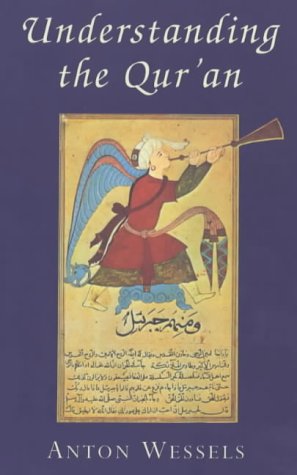
Here's a fascinating reflection on the comparison between the Qur'an and Christ:

"The word of God in Islam is the Qur'an; in Christianity it is Christ. The vehicle of divine revelation in Christianity is the Blessed Virgin; in Islam it is he soul of the Prophet. The Prophet must be illiterate for the same reason that the Virgin Mary must be pure. The human vehicle of a divine message must be pure and unconscious. The divine word can be written only on the clean and unwritten sheet of human receptivity. If the word is in the form of a book, then this purity is symbolized by the illiteracy of the person who is chosen to make this word known among people. Both (the illiteracy of the Prophet and the virginity of Mary) symbolize a deep aspect of this mystery of revelation".

The writer is a Muslim, quoted in Understanding the Qur'an, by Anton Wessels. This book was a bestseller in Holland, presumably in the light of the murder of Pim Fortuyn and the national soul-searching and desire to understand Islam that followed it. It should be on the shelves of the Chaplaincy library, soon, along with the following other new purchases. (What follows is a copy of my weekly email).

In anticipation of the Da Vinci Code film, we have two books that take an accessible but not overly dogmatic view of Dan Brown's money-spinner. They are both very easy to peek into without getting bogged down. They give answers to curious questions such as, who were the Gnostics? did Constantine really put the Bible together? and who was this Mary Magdalene?

Truth and Fiction in the Da Vinci Code, A Historian Reveals What We Really Know about Jesus, Mary Magdalene, and Constantine, by Bart D. Ehrman

and

The Real History Behind the Da Vinci Code, by Sharan Newman (written with some help by a Professor of History from Reading!).

If by the end of term you are feeling completely burnt out, we have a new edition of The Good Retreat Guide which includes contact details of every kind of monastery, meditation centre, Creation Spirituality house etc. etc., you could possibly want to get you back on your feet (and how to do a retreat if you've never done one before).

If you've never looked into how a gospel 'works' or how they came about, and you want to find a safe place somewhere between complete skepticism and fundamentalism then Adrian Graffy's easy to read Trustworthy and True, the Gospels beyond 2000 might be for you.

Or, as is often the case, you've never been taught how to pray (or have only been taught one way which doesn't work for you) then John Pritchard's superb and simple How to Pray, A Practical Handbook has 25 different prayer styles (including using music, the arts, scripture, silence, Celtic, Franciscan and other styles - and also how to keep a prayer life fresh and how to pray in difficult situations).

Finally we now have the complete set of Brian McLaren's works. Brian is an American Evangelical who is thinking through his faith in extremely interesting (and for some, challenging) ways.

The subtitle of his A Generous Orthodoxy, Why I am a missional + evangelical + post/protestant + liberal/conservative + mythical/poetic + biblical + charismatic/contemplative + fundamentalist/calvinist + anabaptist/anglican + methodist + catholic + green + incarnational + depressed-yet-hopeful + emergent + unfinished Christian, should speak for itself!

We also have now the full set of his A New Kind of Christian series which does theology through narrative (think Sophie's World meets twenty-first century imaginative Christianity, covering science and faith and the thorny topic of hell).

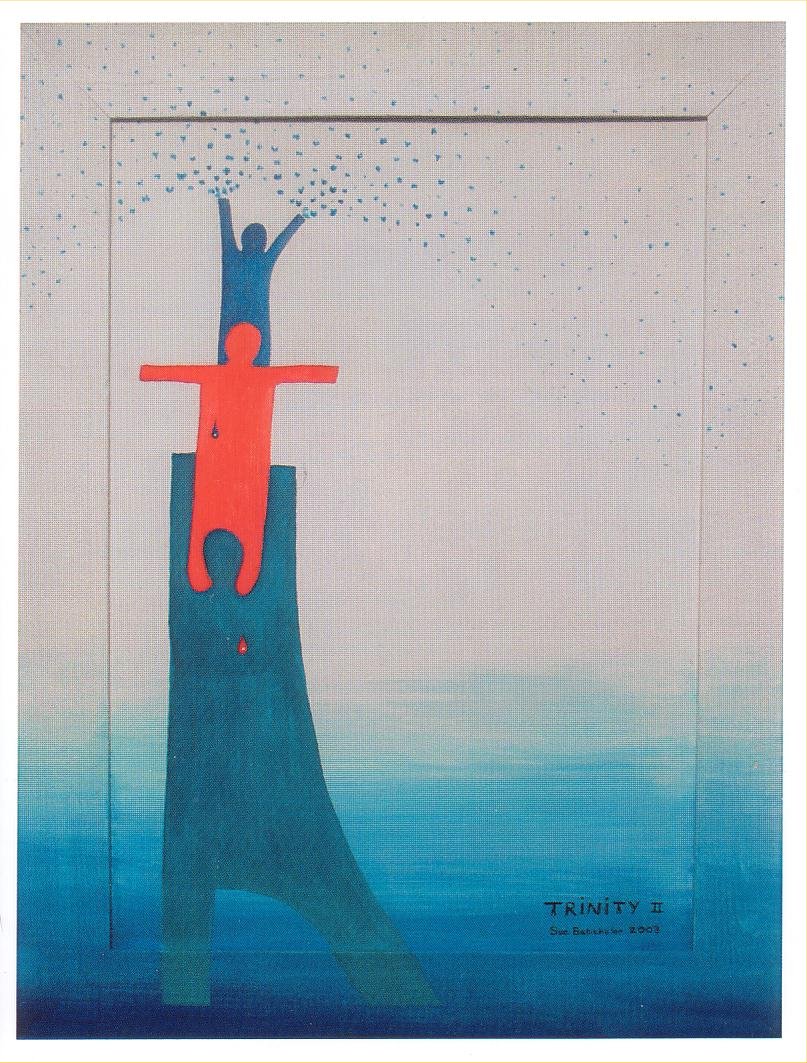
Faithful Art: Trinity II


My fellow Chaplain, Sabine, and I paid a visit to Sue Batchelor this morning to look at some of her art work with a view to hanging some pictures in the Chaplaincy.
I've loved Sue's work since I first saw it hanging in St John and St Stephen's Church (seeing it was a great reason to stay - how many churches these days value the visual arts?).

This work is entitled Trinity II. There's a strange mixture of shared pain - the interpenetration of the red/blue drops between the Crucified Son and the Father (who 'lifts up' the Son - perhaps a play, as in John's Gospel, upon the dual sense of the 'lifting up' crucifixion/resurrection of Jesus). Then there's also joy - not just the wind-blown allusions in the surmounting figure of the Spirit (a hint too of those pesky minute mustard seeds that Jesus tells us are a parable of the Kingdom) but also the way the picture even looks like a figure on a slide...

Some of her work is available on blank cards here.

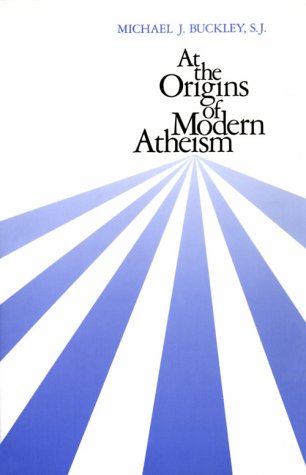
All Christians are Atheists

Michael Buckley begins his monumental study of the Origins of Atheism with the simple (but often overlooked) assertion that atheism is 'parasitic' upon theism:

an inquiry into the origins of atheism must trace the intellectual process from god affirmed to god denied. The content of one constitutes the content and explanation of the other... Atheism is necessarily dependent upon theism for its vocabulary, its meanings, and its embodiments (p. 17).

Atheism is thus not a single phenomenon - it takes its meaning from the form of theism denied.

All Christians are therefore atheists: they deny certain gods. For example, as followers of the Way of Christ the Resurrected Victim, all gods of power without compassion are denied ultimate existence.

(This might well mean, for instance in a political working out of this, that Christians would reject ascribing worth to [i.e. 'worshipping'] nuclear weapons, a form of exercising warfare that inevitably cannot distinguish combantants from civilians).

Atheism is therefore central to Christian theology. Thinking about God not only involves saying 'yes' to some things that the concept 'God' might cover, but also 'no' to other things.

To put it flippantly, on meeting an atheist a Christian should well be able to respond, 'me, too! Which gods don't you believe in?'.

Or, less flippantly, the Christian may well learn from the atheist. For the Christian might - in respectful dialogue - discover that some things which s/he considered true about God may actually turn out to be morally abhorrent or intellectually confused.

Ironically, in that case, the atheist becomes a channel for divine revelation, an other 'Mary' through whom the Word, yet again, takes flesh...

For Peter - hope you find this.

Swift

The swifts winnow the air.
It is pleasant at the end of the day
To watch them. I have shut the mind
On fools. The 'phone's frenzy
Is over. There is only the swifts'
Restlessness in the sky
And their shrill squealing.
Sometimes they glide,
Or rip the silk of the wind
In passing. Unseen ribbons
Are trailing upon the air.
There is no solving the problem
They pose, that had millions of years
Behind it, when the first thinker
Looked at them.
Sometimes they meet
In the high air; what is engendered
At contact? I am learning to bring
Only my wonder to the contemplation
Of the geometry of the dark wings.

R.S. Thomas