The second in the series of RS Thomas poems over Easter is ‘Aftermath’. Thomas often alights on the image of ‘the machine’ as a malevolent description for a fallen world denuded of compassion. Here, at Easter, an innocent – the child – delivers the goodnews that even the machine (a car wreck?) is redeemed.
Aftermath
Easter. The grave clothes of winter
are still here, but the sepulchre
is empty. A messenger
from the tomb tells us how a stone has been rolled
from the mind and a tree lightens
the darkness with its blossom.
There are travellers on the roads
who have heard music blown
from a bare bough and a child
tells us how the accident
of last year, a machine stranded
beside the way for lack of
petrol, is covered with flowers.
R. S. Thomas, 1997.
Taken from “6 poems (1997)”, a signed limited edition produced for the Stratford upon Avon poetry festival. (With thanks to Ian James)


RS at Easter
 For the next four weeks of the Easter break I’m using for the chaplaincy newsletter some poems by RS Thomas, an old curmudgeon of a Welsh priest, sadly dead, whose austere spirituality occasionally glints with real insight.
This week a poem about the Incarnation – God’s ‘coming’ to us in ‘a scorched land of fierce colour’.
Look out for the typical blending of evolution and religious myth (the serpent / river / slime complex) and the nod towards mysticism (Julian of Norwich’s vision of creation as a nutshell in a hand), alongside stark images of human suffering, culminating with just the hint of ultimate hope…
The Coming
And God held in his hand
A small globe. Look, he said.
The son looked. Far off,
As through water, he saw
A scorched land of fierce
Colour. The light burned
There; crusted buildings
Cast their shadows; a bright
Serpent, a river
Uncoiled itself, radiant
With slime.
On a bare
Hill a bare tree saddened
The sky. Many people
Held out their thin arms
To it, as though waiting
For a vanished April
To return to its crossed
Boughs. The son watched
Them. Let me go there, he said.
Taken from RS Thomas, Collected Poems, 1945-1990
The Page Turner
 Just been to see The Page Turner (La Tourneuse de Pages). Precise, cold, revenge served as nouvelle cuisine. A perfect study of 'an eye for an eye'. Guardian review here.
Leafing through my old Bible I came across a quote I had written across the first page as a kind of warning. It still resonates with me. I can't recall who said it - I think it was at Greenbelt in the early 1990s - so perhaps the late Henri Nouwen, but I have an American voice in my head, too, so maybe (the also sadly deceased) Mike Yaconelli:
Religion is not to be believed, it is to be danced.
Review of God Delusion
I've heard rumours about Terry Eagleton's review of Dawkins' latest work, but it proved even funnier than I'd expected. Read it here.
Does faith stay the same or does it change?
I've been reading a book on the spirituality of the Psalms recently. It's writer, Walter Brueggermann, uses a three-fold classification to speak about the faith of the psalmists which I've found helpful.
First, he claims, there are the many simple psalms of trust. In them the writer/ singer tells of God's safe ordering of the world. In those psalms the world appears a safe place where God is in total control. Such psalms could be said to represent a 'pre-critical' stage of faith where everything is taken on trust, no questions are asked.
But then there are those Psalms which accuse God of being absent or asleep or of not caring. These are a second group: the questioning psalms, 'where are you God?' The writer/singer feels unjustly abandoned. The world is not fair. We might say that such psalms represent a 'critical' stage of faith.
Finally there are those psalms which involved a reconciliation of those two earlier stages. Yes: in the world dreadful things happen, God's power is indeed questionable. But through the storm the psalmist has come to a deeper trust. We could call that a 'post-critical' faith which both contains and surpasses what has gone before.
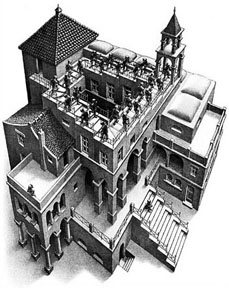
As I was reading I began to think about my own journey of faith and, indeed, I could see those different stages: naive faith, angry questioning, a deeper acceptance. And it has not happened once but, like a spiral, I go through those processes and (hopefully) find myself ascending in faithfulness.
I found the book's observations helpful. Faith is not static. To have faith means to enter on a journey, not to arrive at a destination. And on that journey both the simple trust and the angry denial have their place...
First, he claims, there are the many simple psalms of trust. In them the writer/ singer tells of God's safe ordering of the world. In those psalms the world appears a safe place where God is in total control. Such psalms could be said to represent a 'pre-critical' stage of faith where everything is taken on trust, no questions are asked.
But then there are those Psalms which accuse God of being absent or asleep or of not caring. These are a second group: the questioning psalms, 'where are you God?' The writer/singer feels unjustly abandoned. The world is not fair. We might say that such psalms represent a 'critical' stage of faith.
Finally there are those psalms which involved a reconciliation of those two earlier stages. Yes: in the world dreadful things happen, God's power is indeed questionable. But through the storm the psalmist has come to a deeper trust. We could call that a 'post-critical' faith which both contains and surpasses what has gone before.
As I was reading I began to think about my own journey of faith and, indeed, I could see those different stages: naive faith, angry questioning, a deeper acceptance. And it has not happened once but, like a spiral, I go through those processes and (hopefully) find myself ascending in faithfulness.
I found the book's observations helpful. Faith is not static. To have faith means to enter on a journey, not to arrive at a destination. And on that journey both the simple trust and the angry denial have their place...
Gift
 The more I explore faith, the more I come to see that the concept of 'gift' is an essential one.
If I were to put that into an image, I think it would be a picture of a pair of
outstretched hands, palms held upwards (a gesture, appropriately, many use in prayer).
The Oxford English Dictionary defines 'gift' as 'something, the possession of which is transferred to another without the expectation or receipt of an equivalent'.
Gift resonates with me at many levels:
the gift of the universe,
the gift of my own life within it - for a brief time (who knows how long?)
the gift of those who have loved me.
I have not asked for these things, they have come to me freely, often with an element of surprise. A response of thanks from me has often been forthcoming - but not expected.
Not surprisingly 'gift' seems to be written into the very nature of God:
God, the one who 'gives' space for creation to be,
who, in the Christian tradition, 'gives' God's self in the Incarnation sharing our precarious tragically-beautiful existence,
who 'for-gives' the murder of Christ,
and who returns Christ to the world with the 'gift' of the Spirit.
My wife was in a Bible study group recently discussing the motivations for
sharing faith with others which led us to ponder our feelings on this subject.
On reflection what ultimately drives me as a Christian is the desire to put others in touch with their 'giftedness' so that they may feel and know again the surprise and joy again of their existence.
And beyond that, to encourage them to return 'thanks': to live out their giftedness in such a way that others, too - whose lives may be limited by health, wealth, outlook and environment - can more fully discover their lives as gift.
It's summed up for me at the end of the Anglican Communion service, when after receiving the 'gifts' of bread and wine we pray:
Almighty God, we thank you for feeding us with the body and blood of your Son Jesus Christ, through him we offer you our souls and bodies to be a living sacrifice. Send us out in the power of your Spirit, to live and work to your praise and glory. Amen.
Subscribe to:
Posts (Atom)